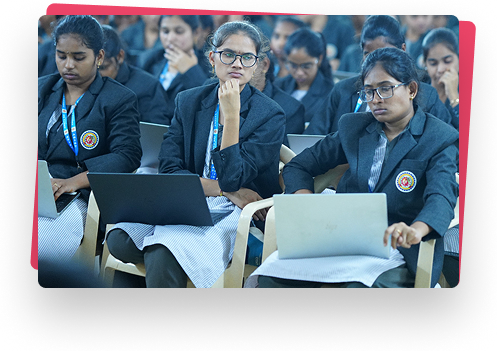
Graduates will apply foundations in mathematics, science, and computer science to analyse and solve real-world data-centric problems.
Graduates will pursue professional careers in data analytics, data engineering, and technology-driven organisations or advance into higher education, research, and continuous learning.
Graduates will demonstrate communication skills, ethical judgement, leadership qualities, and collaborative ability while contributing responsibly to society.
Apply mathematics, science, and core computer science principles to solve complex data engineering problems.
Identify, formulate, and analyse data-related problems using principles of mathematics, statistics, and engineering.
Design data processing and analytics solutions considering performance, safety, and societal impact.
Conduct investigations using data-driven experimentation, analysis, and interpretation to reach valid conclusions.
Select and apply modern data analytics, visualization, and computing tools with awareness of limitations.
Assess societal, legal, and ethical implications of data-driven solutions.
Understand the environmental and societal impact of large-scale data systems and support sustainable practices.
Demonstrate commitment to ethical principles and responsible data practices.
Function effectively as an individual, team member, or leader in multidisciplinary environments.
Communicate analytical findings clearly through reports, visualisations, and professional interaction.
Apply engineering and management principles to plan and manage analytics projects.
Recognise the need for continuous learning and adapt to evolving data technologies.
Analyse data-centric problems and design, implement, and evaluate scalable data analytics solutions.
Apply research-oriented methods, modern analytics tools, and ethical practices to derive actionable insights from data.
A curriculum structured to address large-scale data processing and analytical decision-making.
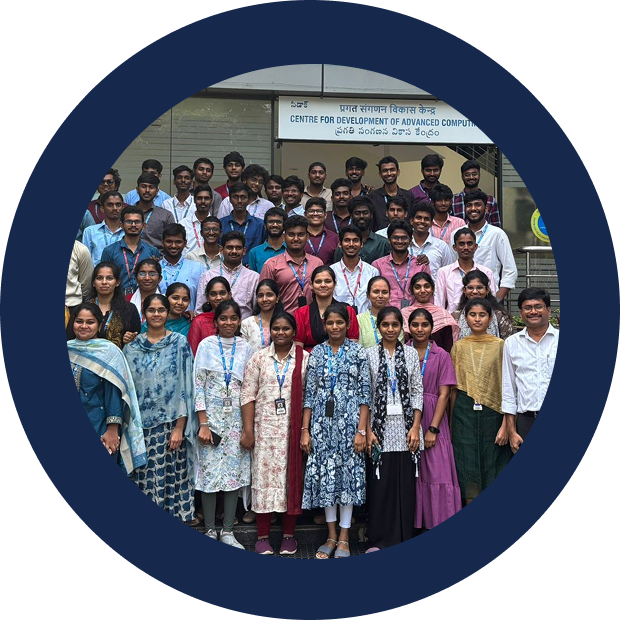
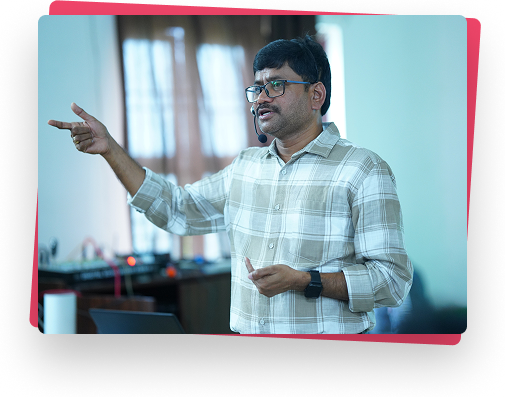
The Computer Science & Engineering program in Big Data Analytics at Amrita Sai Institute of Science and Technology focuses on managing, analysing, and interpreting large-scale data systems. The curriculum integrates core computer science with data engineering, analytics frameworks, and machine learning fundamentals. Through structured coursework, laboratory exposure, and guided projects, students develop analytical depth and practical capability to work with data-driven systems across technology, business, and research environments.
Graduates will apply foundations in mathematics, science, and computer science to analyse and solve real-world data-centric problems.
Graduates will pursue professional careers in data analytics, data engineering, and technology-driven organisations or advance into higher education, research, and continuous learning.
Graduates will demonstrate communication skills, ethical judgement, leadership qualities, and collaborative ability while contributing responsibly to society.
Apply mathematics, science, and core computer science principles to solve complex data engineering problems.
Identify, formulate, and analyse data-related problems using principles of mathematics, statistics, and engineering.
Design data processing and analytics solutions considering performance, safety, and societal impact.
Conduct investigations using data-driven experimentation, analysis, and interpretation to reach valid conclusions.
Select and apply modern data analytics, visualization, and computing tools with awareness of limitations.
Assess societal, legal, and ethical implications of data-driven solutions.
Understand the environmental and societal impact of large-scale data systems and support sustainable practices.
Demonstrate commitment to ethical principles and responsible data practices.
Function effectively as an individual, team member, or leader in multidisciplinary environments.
Communicate analytical findings clearly through reports, visualisations, and professional interaction.
Apply engineering and management principles to plan and manage analytics projects.
Recognise the need for continuous learning and adapt to evolving data technologies.
A curriculum structured to address large-scale data processing and analytical decision-making.

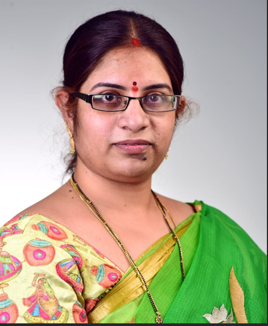
Dr. Divya Vadlamudi is a versatile academic leader committed to strengthening institutional excellence through innovative curriculum design, student-centric pedagogies, flexible learning pathways, and academic quality enhancement. With a strong focus on academic governance, faculty development, and outcome-based education, she strives to build an ecosystem that fosters excellence in teaching, learning, research, and innovation.
Her vision is to bridge academia and industry by promoting experiential learning, industry- aligned internships, credit-based education, multidisciplinary collaboration, and the integration of emerging technologies. She is passionate about nurturing future-ready graduates who are professionally competent, socially responsible, ethically grounded, and equipped to lead in a rapidly evolving global landscape.