
Civil Engineering Department
Where Infrastructure Meets Design, Planning, and Responsibility
The Civil Engineering Department at Amrita Sai Institute of Science and Technology focuses on building strong foundations in infrastructure design, construction systems, and environmental responsibility. The department integrates core civil engineering principles with practical application, preparing students to work across construction, planning, and development sectors.
With a structured academic approach and strong laboratory support, students learn how to design, analyse, and execute engineering solutions that shape the built environment. The programme emphasises precision, safety, and long-term sustainability in every aspect of learning.
Academic Pathways in Computer Science
B.Tech in Civil Engineering
This programme builds strong foundations in structural engineering, geotechnical engineering, transportation systems, environmental engineering, and construction management. The curriculum ensures that students first develop conceptual clarity before applying it through field work, lab sessions, and project-based learning.
With exposure to real-world construction practices and engineering tools, students are prepared for roles across infrastructure development, construction management, and planning sectors.
M.Tech in Structural Engineering
An advanced programme focused on structural analysis, design, and advanced construction techniques. Students work with modern design methodologies, simulation tools, and analytical frameworks to understand complex structures and materials.
The programme emphasises precision, safety, and optimisation, preparing graduates for roles in structural design, consultancy, construction engineering, and research-oriented work.
How Learning Is Structured
Principles first.
Application next.
Execution throughout.
Related branches:
- Strong grounding in structural, geotechnical, and environmental engineering
- Progressive exposure to design tools, construction practices, and analysis methods
- Continuous lab work and field-based learning
- Project-driven approach aligned with real-world infrastructure challenges
- Curriculum aligned with industry standards and evolving construction technologies
Learning Infrastructure
Laboratories for Geotechnical Engineering, Concrete Technology, and Transportation Engineering
Hydraulics and Environmental Engineering labs for applied experimentation
Surveying and GIS tools for field-based learning
Material testing labs for structural analysis and validation
Access to academic resources and engineering design tools
Department Strengths
- Recognised Research Centre under JNTU Kakinada
- NAAC ‘A’ Grade accredited academic environment
- ISO 9001:2015 certified academic processes
- Well-equipped civil engineering laboratories and field tools
- Industry-linked training and exposure to real-world projects
Beyond the Classroom
Learning extends through field exposure and applied experience.
Students actively engage in:
- Site visits and field-based learning
- Technical seminars, workshops, and expert lectures
- Structural design and project work
- Research activities and technical presentations
- Industry interaction and certification programmes
Head of Department
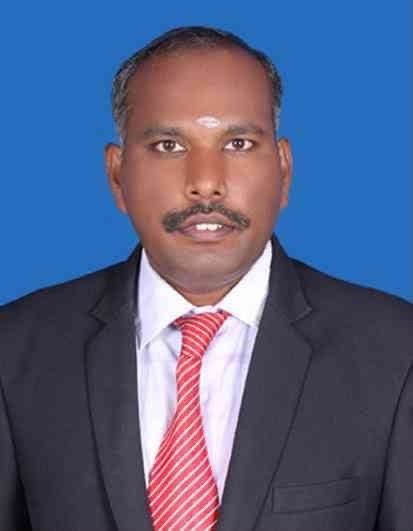
Dr.M.Thiyagarajan
Professor & Head – Civil Engineering
After completed my doctoral degree i joining as Guest Lecturer in Civil Engineering department, Government Engineering College, Sengipatti, Thanjavur in 2014 and I shifted as Guest Lecture in Civil Engineering Department in Anna University, Thirukkuvalai, Nagapptnam district in 2015. After i joined as Assistant Professor in Civil Engineering department in Jayaram Engineering college, Karatampatti,Trichy District from 2015 to 2016. I shifted and joined to Nova College of Engineering and Technology, Ibrahimpatnam,Krishna district, Andhra Pradesh, as Associate Professor in Civil Engineering department from 2016 to 2018. Currently working as Associate Professor and Academic Head in Department of Civil Engineering Amritasai Institute of Science and Technology, Paritala,Andhra Pradesh from 2018 to still Now. More than 17 years’ experience for research, industries and teaching field. During this period 6 international paper published including one SCI indexed journal. And I attended 12 training program in various university and 3 FDP program including one ATAL FDP for various Institutions.
I teach as undergraduate students of B.Tech Civil Engineering about, the Engineering Geology, Hydrology, Surveying, Watershed Management, Environmental Engineering, Water Resource Engineering, Remote Sensing and GIS and Geotechnical Engineering at various institutions. A field trip will allow students to witness the results of the geological processes they are learning about in their local environment. Lectures are inspired with ample opportunity for discussion and feedback from the students. During my career, I have taken every opportunity to involve student’s research work. I was responsible for the establishment of the various laboratories. My future research interests are broad and have included Quantum Computing, Environmental Geochemistry, Remote Sensing and GIS, and Stable Isotope signature multi-faced environmental problems.
- 01 Patent
Where This Leads
Prepared for infrastructure. Ready to shape environments.
